

The case for optimism: opportunity in an asymmetric economy
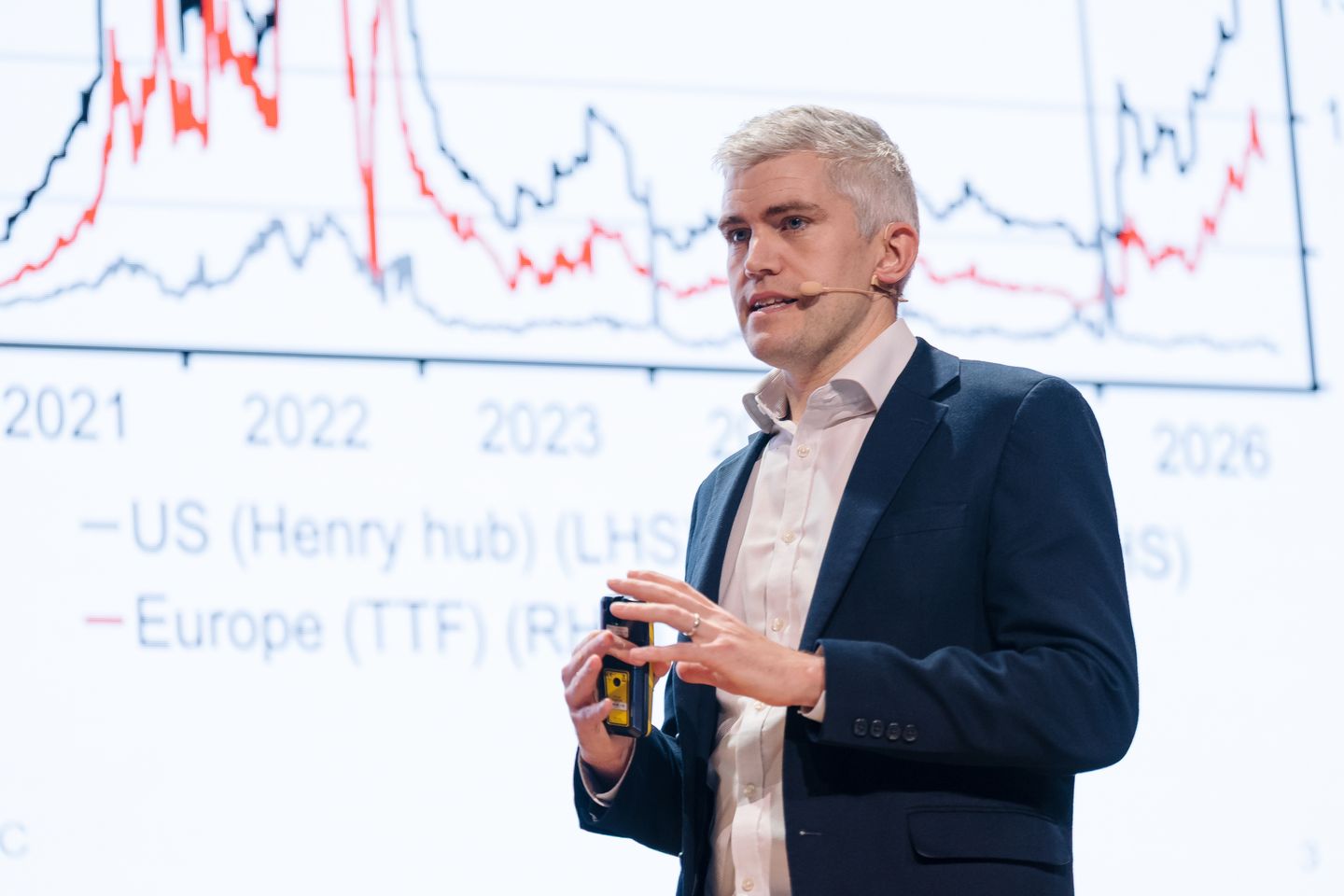
With his characteristic blend of sharp intellect, humour and self-deprecation, James Pomeroy returned to the Peach stage to offer something in relatively short supply in British business circles: optimism.
Not blind optimism, nor a dismissal of the very real pressures facing hospitality operators. Rather, an evidence-led argument that the global economy is proving remarkably resilient – and the UK may be better positioned than many appreciate.
Resilience confounds the economists
Pomeroy cheerfully acknowledged that his predictions for lower energy prices and interest rate cuts, delivered from the Peach stage a year earlier, hadn't quite gone to plan. Yet despite a geopolitical and energy shock considerably worse than his team's worst-case scenario, global economic growth has exceeded even their best-case expectations.
Faced with rising costs and limited pricing power, businesses are finding other answers: rethinking operating models, becoming leaner and harnessing technology to improve productivity.
The UK: winning by default?
Having spent much of the past decade questioning Britain's attractiveness as an investment destination, Pomeroy now finds himself making a rather different case. US tariffs, geopolitical instability, improving European relationships and Britain's international trading arrangements (such as the latest deal with India) are enhancing the UK's relative attractiveness. Investment in AI, life sciences and advanced manufacturing is helping underpin growth.
“The UK wins by default, not by planning necessarily, but by default.” Or, as he put it with deliciously British understatement, the UK is “less bad than everyone else”. Hardly a slogan for an international investment campaign, but for business leaders deploying capital, it matters.
One economy. Very different realities.
Pomeroy was under no illusion about the hardship facing significant sections of society. For working households with limited assets, weakening employment prospects, diminishing wage bargaining power and rising food and energy bills, 2027 could feel decidedly recessionary.
“This feels like a recession to a lot of people,” he acknowledged. Yet UK consumer spending, according to Pomeroy, has been growing at around 2.5% a year. How do we reconcile the two?
Welcome to the K-shaped economy. While some households are being squeezed, wealthier consumers continue to spend on travel, leisure and experiences. Pomeroy illustrated the point with his astonishment at what people were prepared to pay to watch Ivory Coast play Curaçao on a Thursday afternoon at the World Cup.
For hospitality leaders, the implications cut both ways. Pricing power is increasingly constrained in some segments, while discretionary demand remains remarkably robust in others. Understanding where your business sits in this polarised market is fundamental to decisions about proposition, pricing and investment.
The rise of the off-peak economy
Changing working patterns, four-day weeks, entrepreneurship and a growing retired population are eroding the traditional Monday-to-Friday, nine-to-five rhythm. Tourism is already experiencing this shift, with growth in destinations such as Spain and Greece increasingly concentrated in the shoulder seasons.
Then there's the power of the silver pound. According to Pomeroy, around half of UK pensioners have assets exceeding £500,000, while the pensioner population across developed economies is growing at around 2% a year.
An expanding, relatively affluent demographic with time to spare and an appetite for leisure presents a significant commercial opportunity. His own parents, seemingly permanently on holiday after investing in a home extension, provide a living case study, he said.
Could hospitality's next growth opportunity lie in underutilised capacity rather than new sites? In Tuesday lunchtime rather than Saturday night? In a demographic too often overlooked by marketers?
Optimism, not complacency
Economic resilience does not mean universal prosperity. Pomeroy wasn't promising lower taxes, an end to cost pressures or an easy ride through 2027. But business leaders cannot afford to let the prevailing economic narrative obscure genuine opportunities.
Where is demand growing? Where is it contracting? Where are the underserved markets? How might existing assets work harder? The winners won't necessarily be those waiting for the economy to improve, but those adapting fastest to the economy as it is.
There's a compelling case for optimism. And an even stronger one for commercial curiosity.
Peach 20/20 thanks it's partners, without whom these events would not be possible.
Headline Partners: Access Hospitality, Diageo, Fourth, NIQ, Nutritics, Sona and Tevalis; Premium Partners: Discover Network, Enotria, Harri, HeyGuest, TiPJAR, and Uber Eats; Event Partners: Bird & Bird, Brakes, Botivo, Coca-Cola Europacific Partners, Hawkstone, Krowd, Lucky Saint, Northern Restaurant & Bar, & PayCaptain.